
The question behind the question
When someone asks about buying a hybrid car in Bahrain, they usually mean one of three things: will it save me money, will it survive the summer, and will it be a hassle to live with?
Worth answering all three honestly rather than reaching straight for a brochure.
Does a hybrid save money in Bahrain?
It depends almost entirely on what kind of driving you do.
Where hybrids win: stop-start traffic. A conventional petrol engine idling at a junction burns fuel and produces nothing. A hybrid shuts the engine down and moves off on electric power. If your commute involves the Manama approach roads at peak hour, or school-run traffic in Saar and Budaiya, this is where the savings accumulate.
Where the advantage narrows: sustained highway driving. At a constant 100 km/h, a petrol engine is already operating efficiently and there is less for the electric side to contribute.
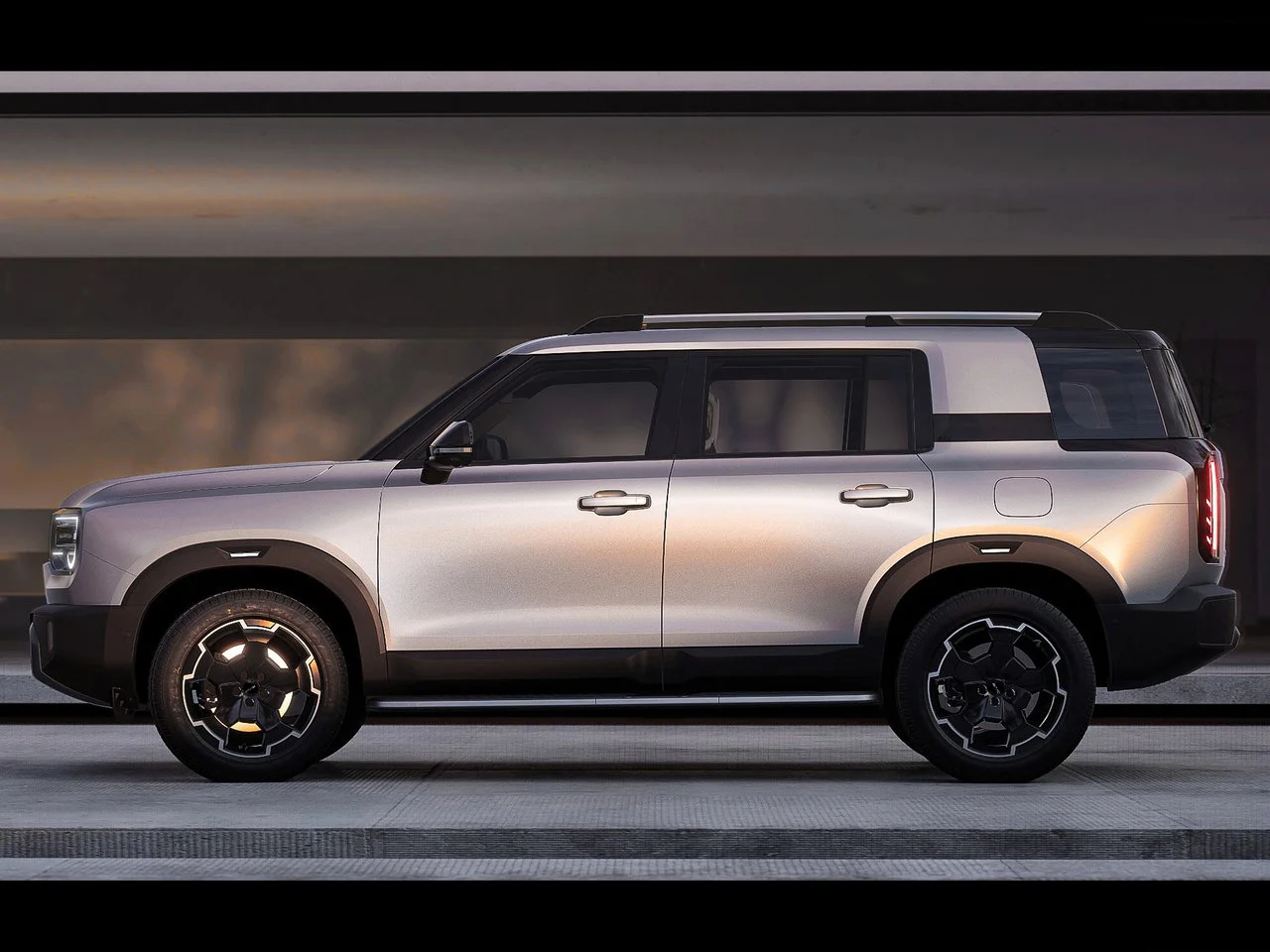
As a real example, the BAIC BJ30 Hybrid is rated at 6.45 L/100km in its 1.5T DHT four-wheel-drive form, against 8.06 L/100km for the conventional 1.5TD front-wheel-drive version of the same vehicle. That is roughly a 20 percent reduction.
Whether that repays the price difference is a mileage calculation, and it is one you should do with your own numbers before buying.
Will the battery cope with Bahrain's heat?
This is the most common worry, and it is a fair one — heat is hard on batteries.
Three things are worth understanding:
Hybrid batteries are actively managed. They are not passive cells sitting in a hot engine bay. Modern hybrid systems include thermal management and will limit charge and discharge rates to protect the pack when temperatures climb.
Hybrid batteries are small and shallow-cycled. A self-charging hybrid pack is a fraction of the size of an electric vehicle battery and spends its life cycling within a narrow band rather than being run flat and fully recharged. That is a gentler duty cycle.
Parking matters. Covered or shaded parking reduces soak temperature significantly, and it is the cheapest thing you can do for the health of any car's electronics in this climate.
Is a hybrid harder to live with?
For a self-charging hybrid, no. There is no plug, no charging cable, no route planning around charging points. You fill it with 92 octane petrol at the same station as everyone else. The only difference you notice day to day is that the engine is sometimes off when you expect it to be running.
Servicing is broadly conventional, with the addition of hybrid system checks. Use an authorised workshop — hybrid systems run at high voltage and are not something to hand to a general garage. You can schedule a service directly.
One genuine benefit: brake wear is usually lower. Regenerative braking recovers energy by using the motor to slow the car, so the friction brakes do less work.
Self-charging, plug-in or electric?
Self-charging hybrid. Petrol engine plus electric motor, charged by the engine and braking. No infrastructure needed. The most practical option in Bahrain today.
Plug-in hybrid. Larger battery, some electric-only range, but needs charging at home to deliver its benefit. If you cannot charge where you park, the advantage largely disappears.
Battery electric. No fuel cost, but depends entirely on charging access and the public network.
For most buyers in Bahrain right now, the self-charging hybrid asks for nothing new and delivers a real fuel saving.
The hybrid option in the BAIC range
The BJ30 Hybrid is the hybrid in the BAIC Bahrain lineup, and it is an unusual one — a hybrid SUV that is also a genuine 4x4.
- 1.5T engine with 115 kW and 230 Nm
- Two electric motors: 130 kW / 315 Nm and 55 kW / 135 Nm
- Dedicated Hybrid Transmission
- Real-time four-wheel drive with Mud, Sand and Wading modes
- 215 mm ground clearance
- 6.45 L/100km
- Five seats, 4730 mm long
Standard equipment includes a 14.6-inch screen, 10.25-inch instrument display, adaptive cruise control, 360-degree camera, automatic emergency braking with pedestrian detection, blind spot detection, lane keeping assist, front seat ventilation and a 220V outlet in the boot.
If a hybrid isn't the right fit
Not everyone's driving suits one. If you cover mostly highway kilometres, a conventional turbocharged petrol may serve you just as well for less outlay. The X55 and All New X7 both use the 1.5TD engine with 138 kW and 305 Nm and a 7-speed dual-clutch gearbox.
Book a test drive
The clearest way to judge a hybrid is to drive it in traffic, where the system does most of its work. Book a test drive or send a sales enquiry.